

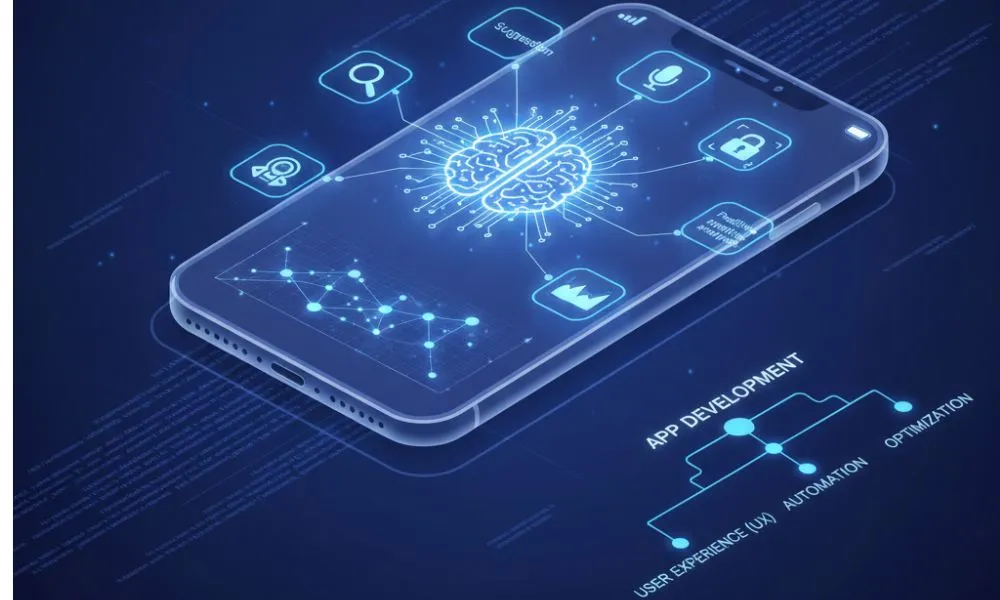
Artificial Intelligence (AI): Broadly, AI aims to create machines that can perform tasks that typically require human intelligence.
Machine Learning (ML): A subset of AI, ML focuses on enabling computers to learn from data without being explicitly programmed.
Personalized Recommendations: ML algorithms analyze user behavior to provide tailored recommendations for products, content, or features. Think of how Netflix suggests shows you might like or Amazon recommends products based on your purchase history. This keeps users engaged and coming back for more.
Predictive User Behavior: ML can predict user actions, allowing developers to proactively optimize the app’s interface and functionality. For example, predicting when a user is about to abandon a purchase and offering a special discount to encourage completion.
Chatbots and Intelligent Assistants: AI-powered chatbots provide instant customer support, answer queries, and guide users through the app. They can also collect valuable feedback and improve the overall user experience.
Intelligent Testing: AI-powered testing tools can automatically identify bugs, performance issues, and security vulnerabilities, significantly reducing manual testing efforts and accelerating the development cycle.
Visual Testing: ML algorithms can analyze screenshots and identify visual discrepancies, ensuring a consistent and visually appealing user interface across different devices and resolutions.
Code Generation and Completion: AI-powered tools can assist developers by suggesting code snippets, completing code blocks, and even generating entire modules, speeding up the development process and reducing the risk of errors.
Automated Data Analysis: ML can analyze large datasets to identify trends, patterns, and insights that can inform development decisions, such as identifying popular features or areas where users are struggling.
Fraud Detection: ML algorithms can analyze user behavior and transaction data to identify and prevent fraudulent activities, protecting both users and the app itself.
Malware Detection: AI-powered security tools can analyze app code and identify potential malware threats, ensuring the app is safe to download and use
Image and Speech Recognition: AI enables apps to understand and respond to images and voice commands, opening up new possibilities for user interaction. Think of apps that translate languages in real-time or identify objects in photos.
Augmented Reality (AR) and Virtual Reality (VR): AI and ML are crucial components of AR and VR apps, enabling them to understand the user’s environment and create immersive experiences.
Smart Search: AI-powered search functionality allows users to find what they’re looking for quickly and easily, even with complex or ambiguous queries.
Cloud-based AI and ML platforms: Services like Google Cloud AI Platform, Amazon SageMaker, and Microsoft Azure Machine Learning offer pre-trained models, development tools, and infrastructure for building and deploying AI-powered applications.
Open-source libraries and frameworks: TensorFlow, PyTorch, and scikit-learn provide powerful tools for developing and deploying custom ML models.
Specialized development tools: Numerous AI-powered tools are available to assist with various aspects of app development, from testing to code generation.
We provide you with ingenious digital marketing and IT Solutions to meet your online business needs.